The Craft · 05
Where the cut lands changes the piece.
A panel has a shape before it is cut. Its place on the skin decides which scale field will face outward.
See the placement01 · Placement study
One outline. Three readings.
Move one panel outline across the skin. Watch how the same form takes on a different pattern at each position.
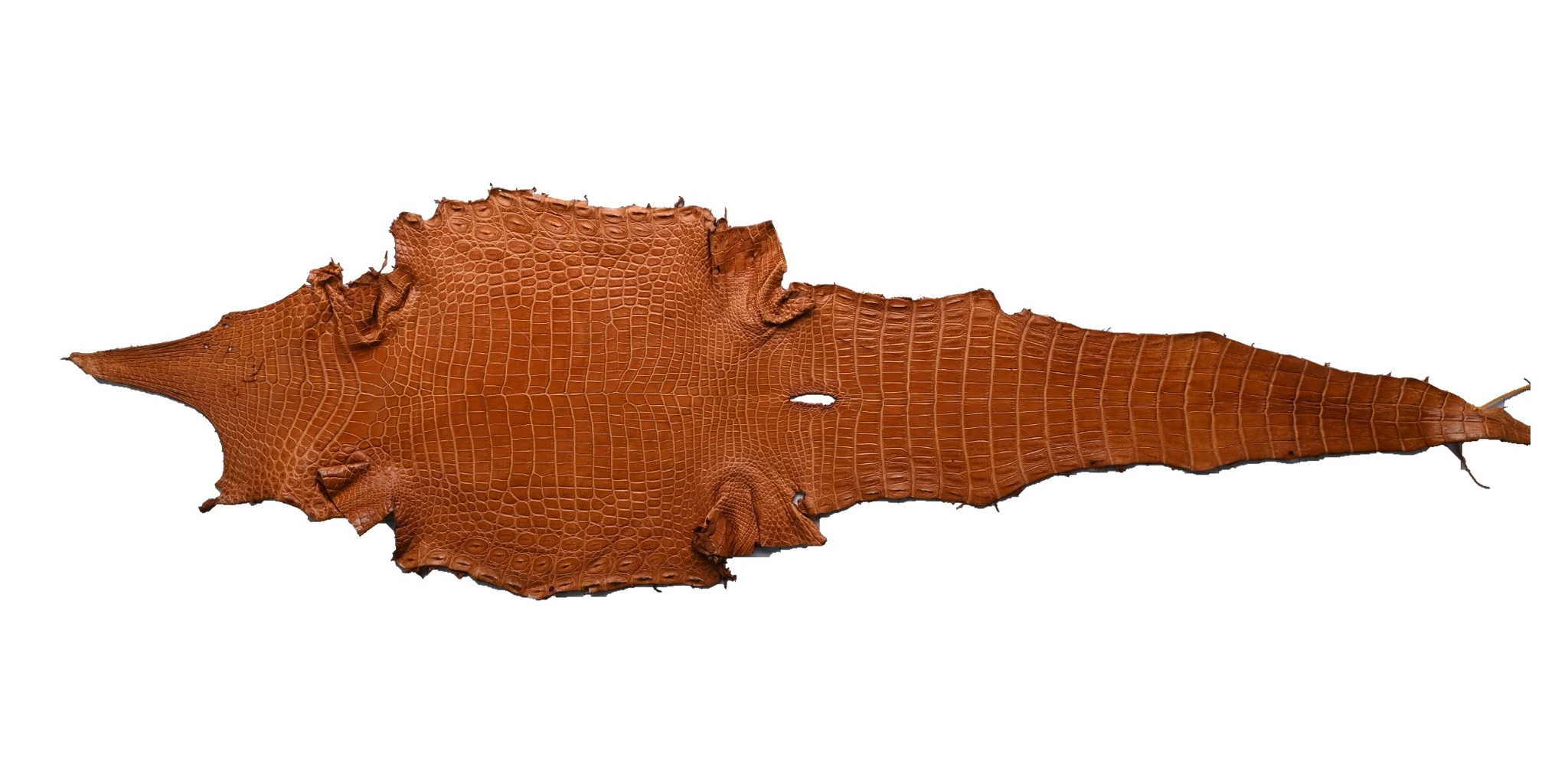
Hypothetical panel view
01 / 03
Central field
Broad, regular rows sit within this outline. The same panel shape reads differently elsewhere on the skin.
One panel shape, three possible readings of the same skin.
Slide the outline and the face of the imagined piece changes. The shape stays still; the skin supplies a new composition.
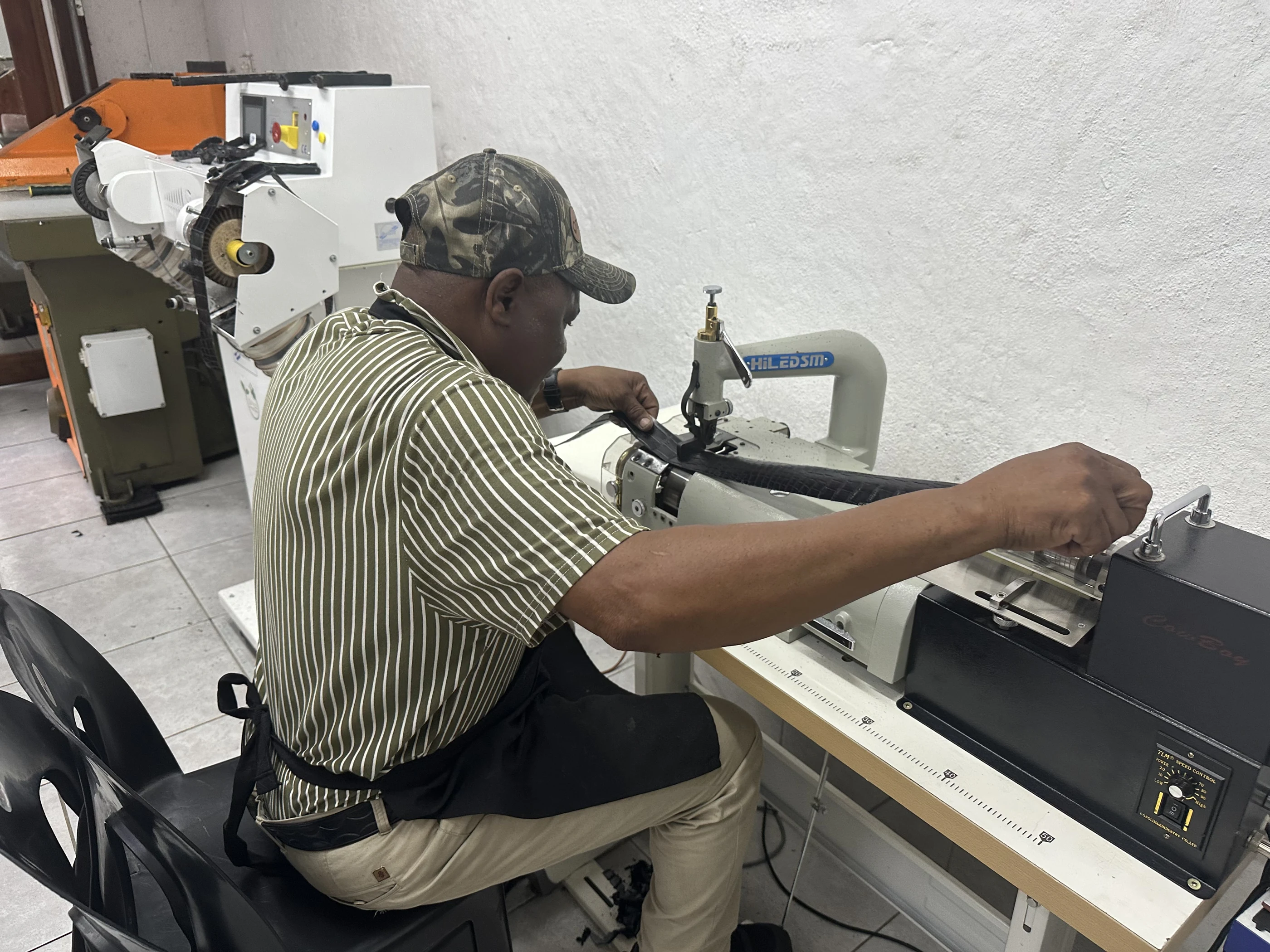
02 · At the machine
A line takes a hand.
Placement decides what the eye sees. Making asks another question: how do the edges and seams meet when the leather is handled?
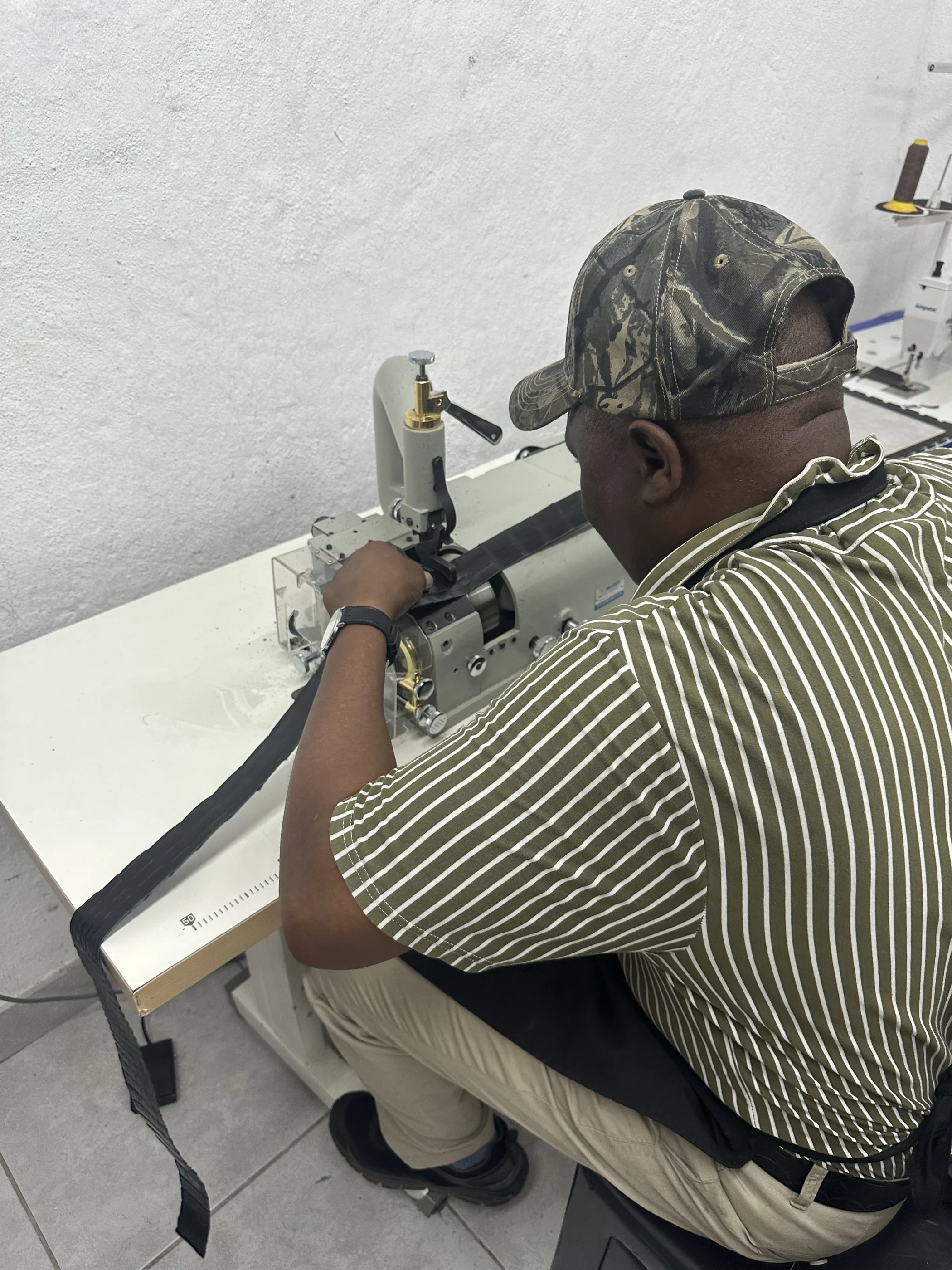
The visible pattern is only one part of the decision. The cut must also become a form that holds together in the hand.
03 · Quality review
The details that hold together.
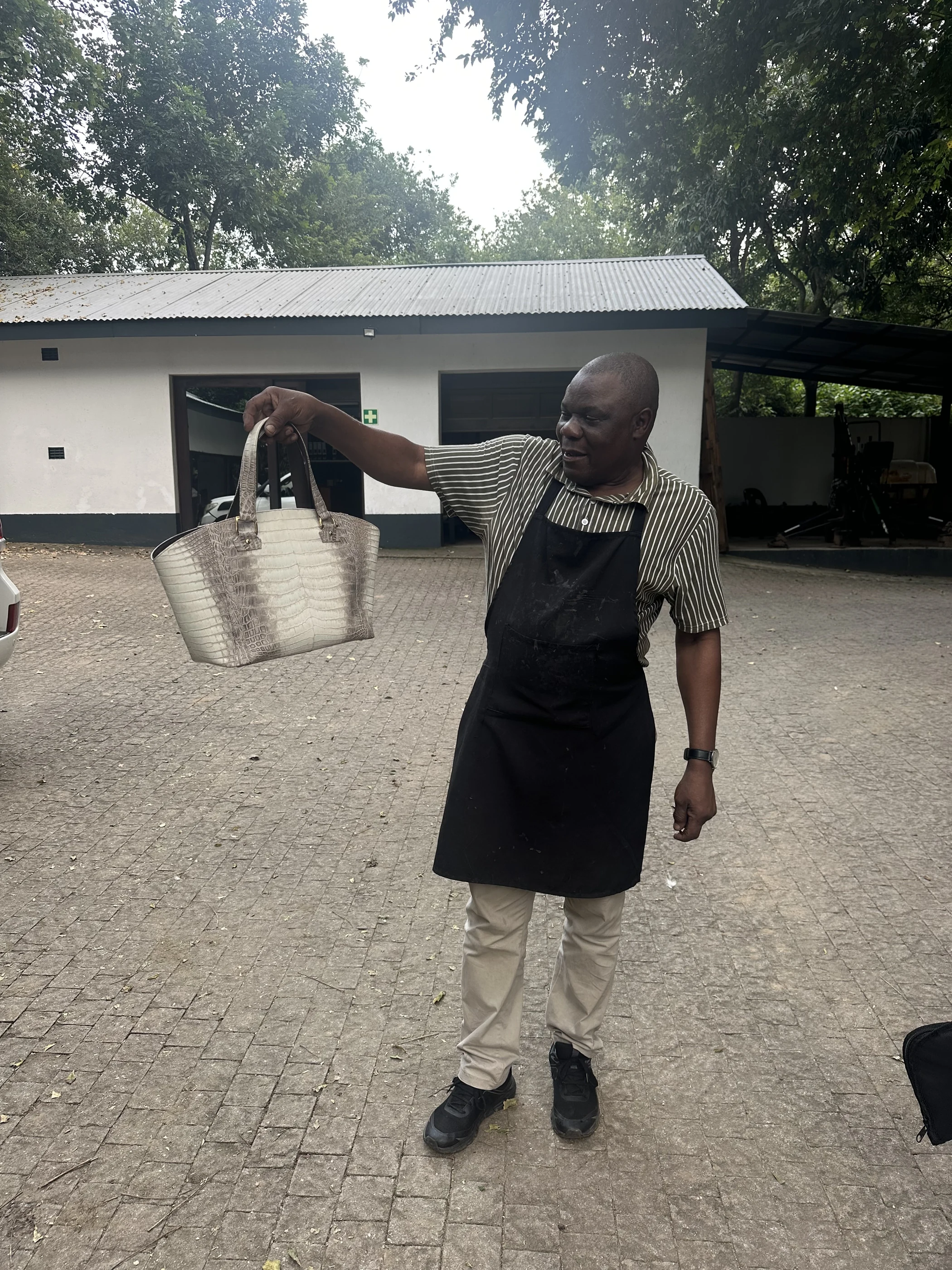
A finished piece asks for more than a strong first impression. Look at the selected material, how the edges meet and the form in the hand.
- 01
Material
Look at the visible scale field and any natural marks before deciding where a panel belongs.
- 02
Construction
Look closely where panels meet: edges, seams and how the form is held together.
- 03
Finished form
Step back and inspect the whole object in the hand, not only a close-up of its surface.
Next · 06 of 07
Now meet the maker.
Go closer to the work at the machine and the people shaping the material.