Give nesting females more separation.
Nesting poles create space around brooding areas in shared enclosures.
The Farm · Hazyview, South Africa
On the banks of the Sabie River, Seronera is a working crocodile farm shaped by a question: what does each animal need at this stage of its life?
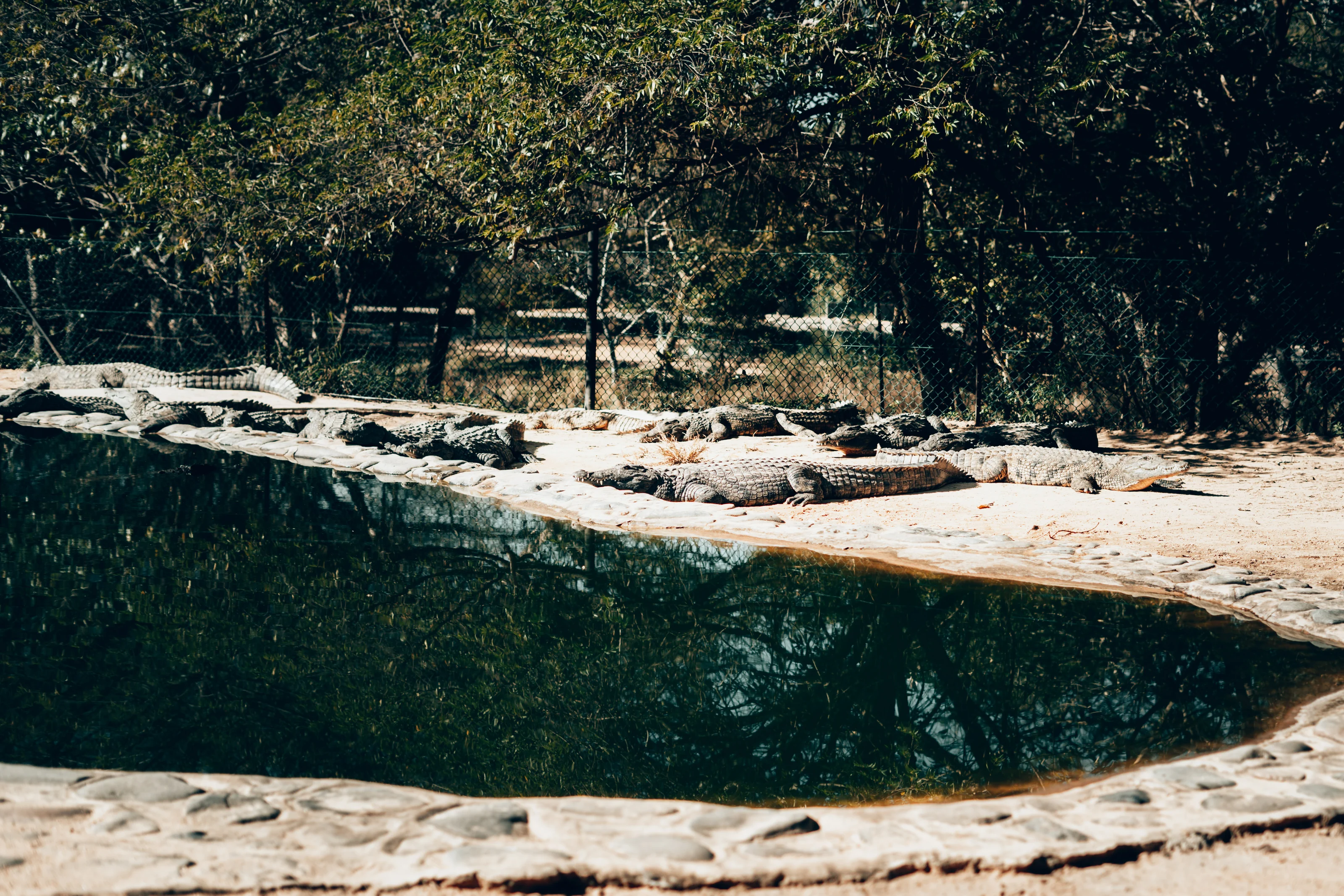
See what changedCrocodiles beside a pool at Seronera Crocodile Farm.
01 · Beginnings
The idea took shape beside the Nile in the 1970s. In 1997, a former citrus property near Hazyview became Seronera Crocodile Farm. The first dams followed in 1998, among the trees and birdlife already here.
See the farm in picturesAn encounter with Nile crocodiles on a journey through East Africa plants an idea for the future farm.
Seronera begins on a former citrus property beside the Sabie River.
The first two crocodile dams are completed.
New custodians take over and begin changing practices across the farm.
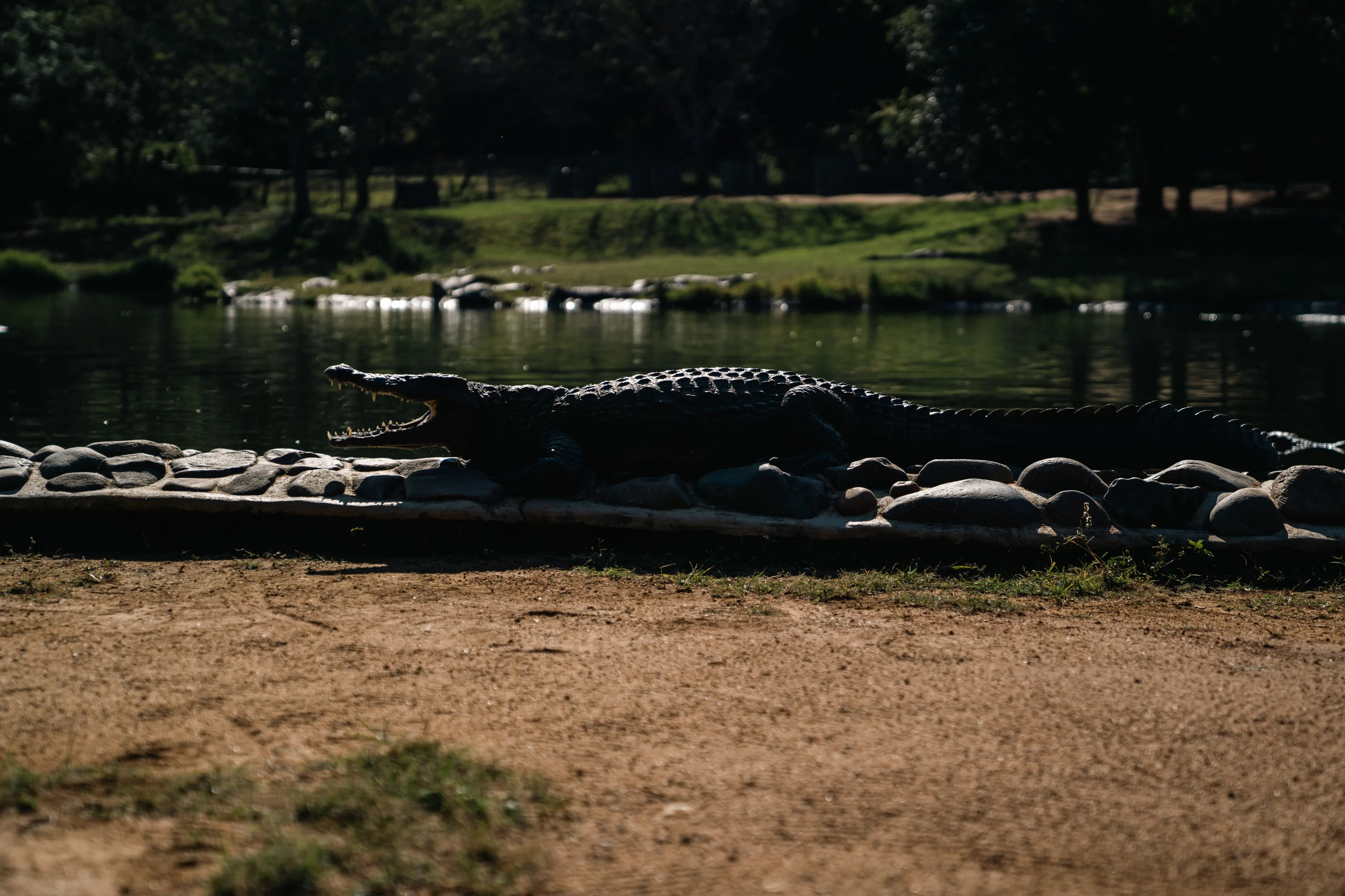
Animals at the water's edge · Seronera farm photography
02 · The animal comes first
A hatchling needs warmth and protection. A growing animal needs room and a fair chance to feed. Follow the life stages to see why one enclosure plan cannot answer every need.
03 · Since the 2022 handover
The team has changed the places animals nest, the way growing crocodiles are grouped, and the routines around water and young animals. Each change begins with something worth noticing.
Nesting poles create space around brooding areas in shared enclosures.
Size grading addresses the disadvantage smaller crocodiles face at feeding time.
Water testing, dam cleaning and incubator hygiene are recurring work.
Safety procedures and training support the people who work around powerful animals every day.
04 · One decision, up close
The team saw an imbalance between neighbouring breeder dams. Instead of moving large animals by hand, they changed the space. Scroll through the decision, or use the steps below.
Illustration of the decision; the dam shapes and passage are not a site plan.
The team saw an uneven breeding picture across adjacent dams. Moving large males by capture would mean intervening with the animals directly.
A passage was made between the dams so crocodiles could move between areas. The farm calls it Lover's Lane.
The passage changed how the animals could move. The team still watches nesting, nutrition, water and incubation; no one intervention tells the whole story.
05 · The farm in pictures
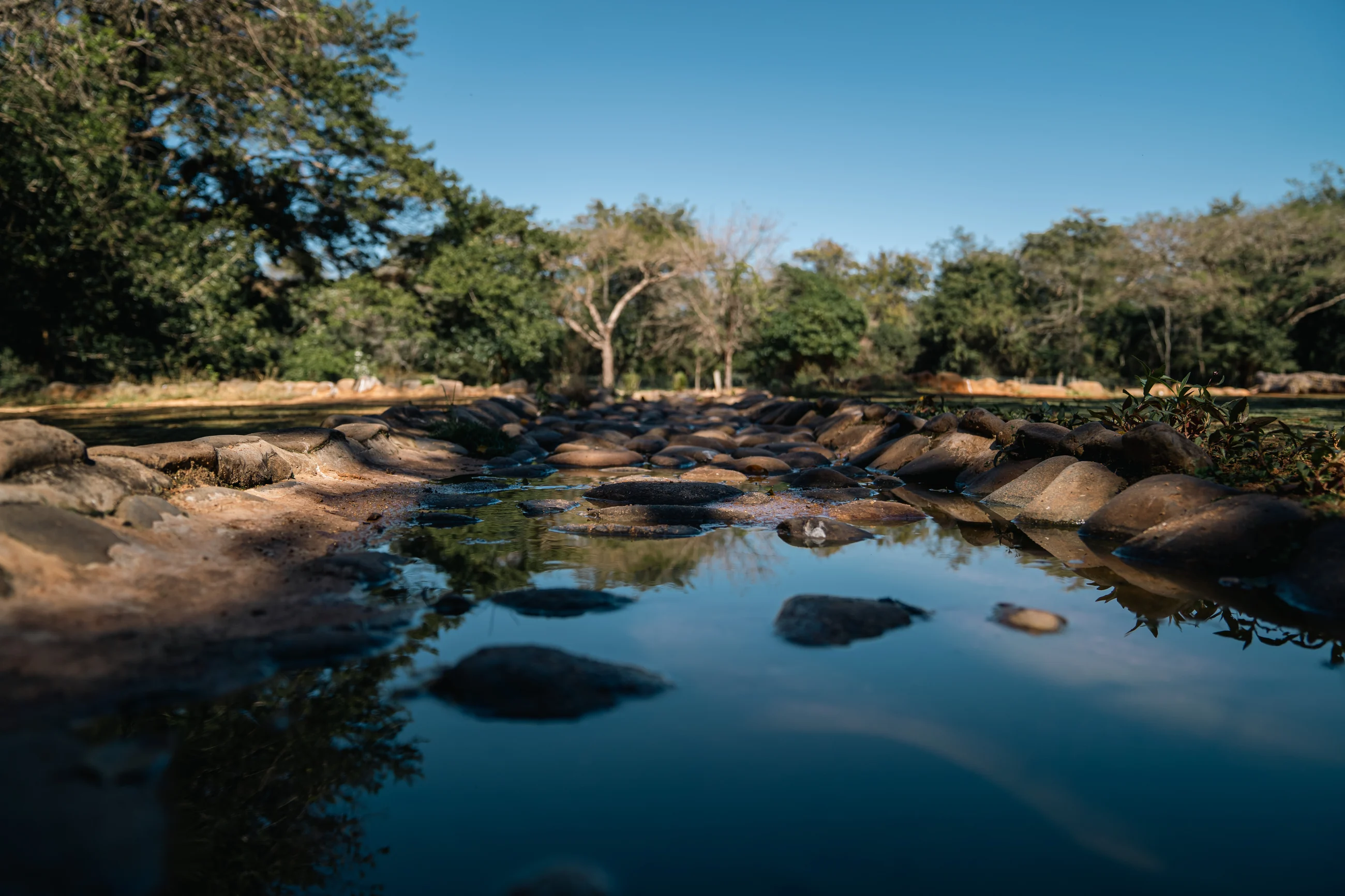
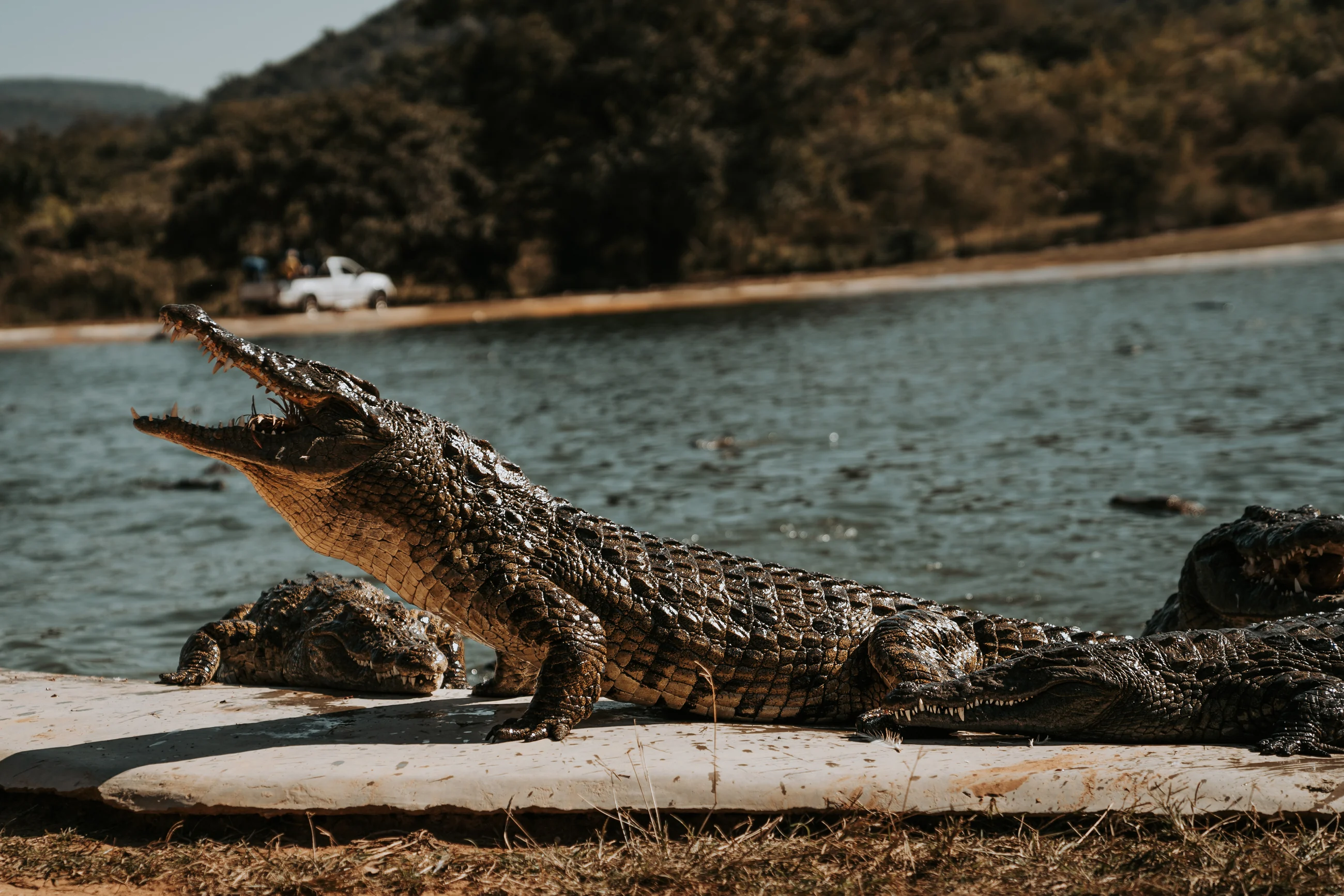
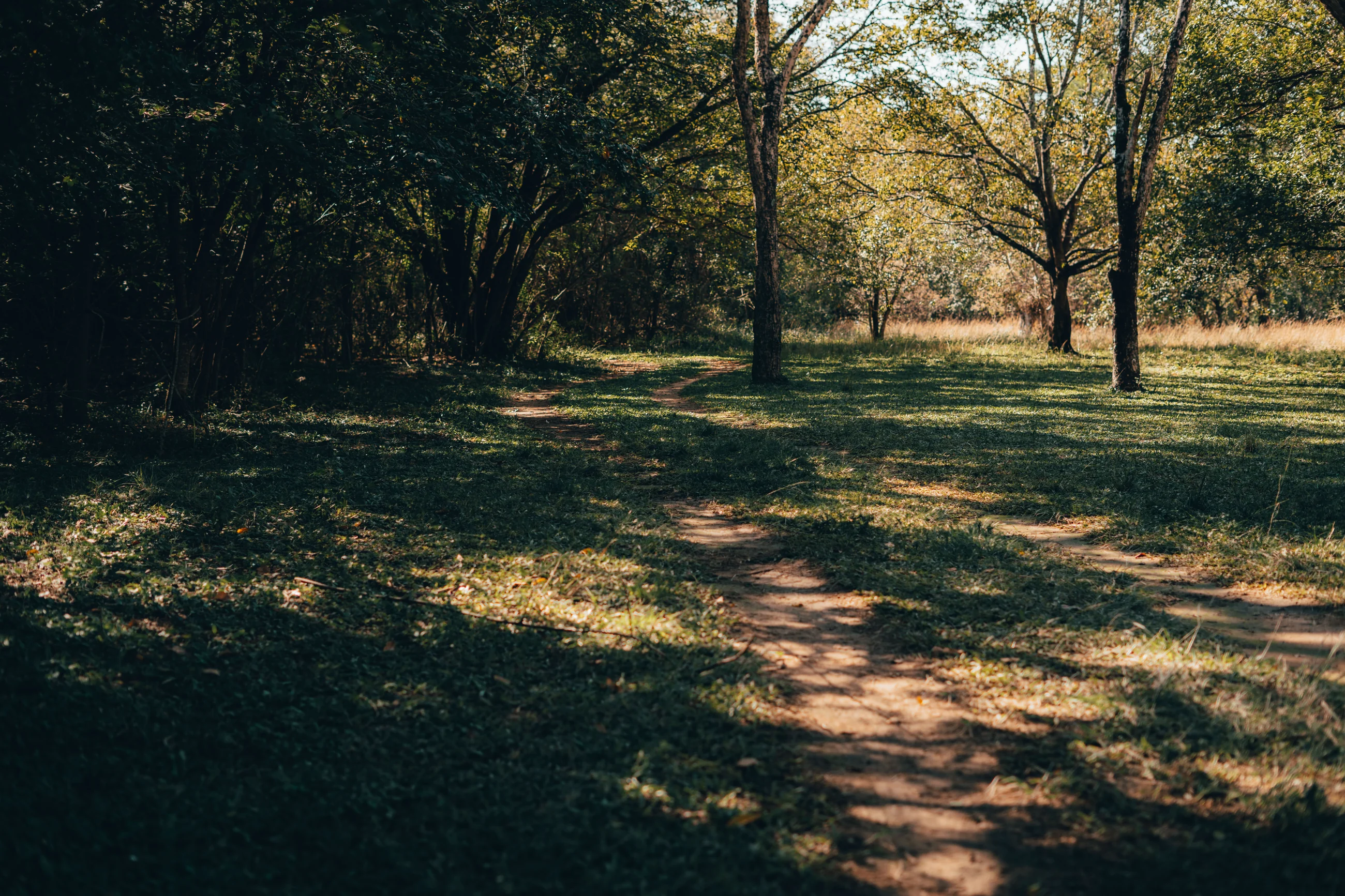
Water, shade, texture and the animals themselves. Each caption describes what the frame shows.
06 · Visit
Stand in the landscape behind these photographs and bring your questions about the animals, the water and the work. Begin with a visit enquiry so the team can explain what is available.
PLAN THE NEXT STEPAsk about a farm visitPersonal and trade enquiriesThe next chapter
Look closer at the skin, the cut and the hands that give it form. Or come to the farm and see the place for yourself.
Explore The Craft Explore the Pieces